
How to Properly Store Your Wine at Home Without a Cellar?
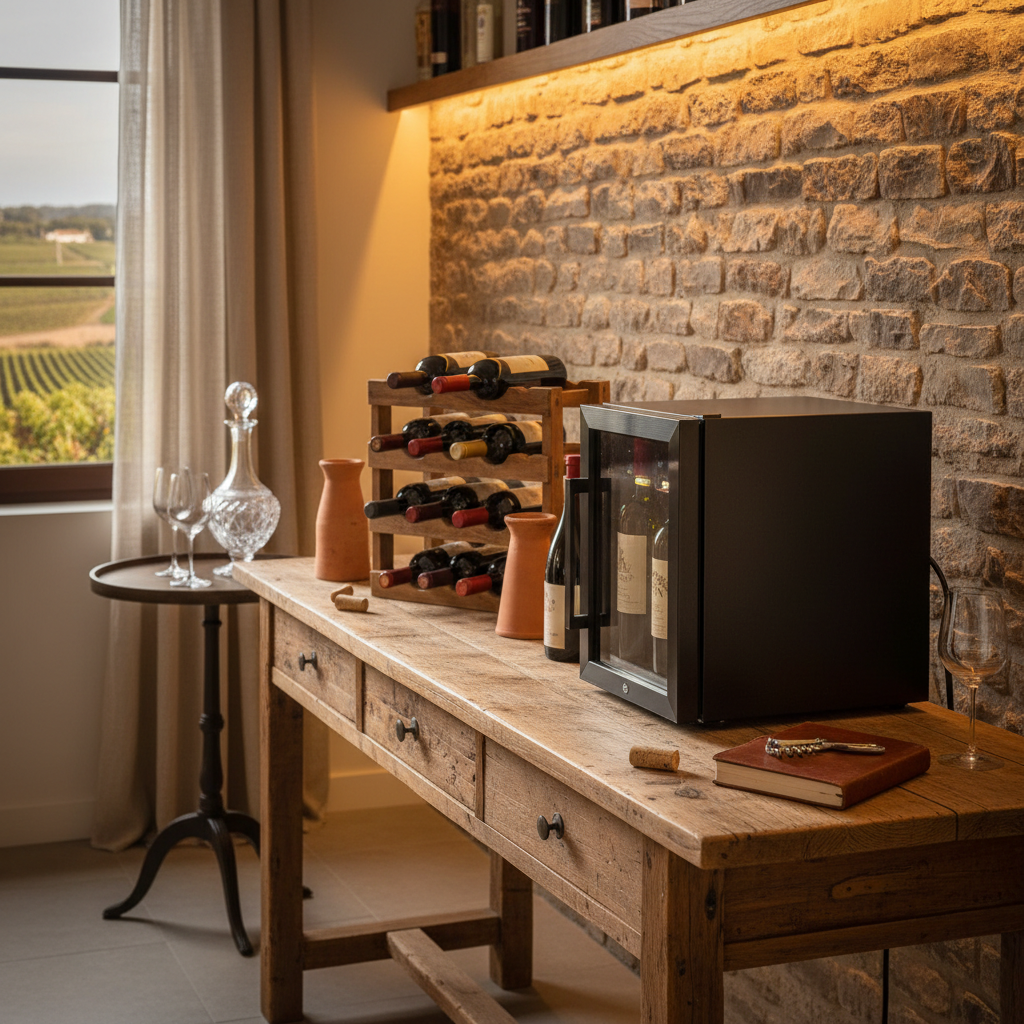
Storing Your Wine at Home Without a Cellar: The Ultimate Guide to Preserving Your Precious Nectars
You are a wine lover, you enjoy discovering new bottles and building a small collection. But alas, you don't have the luxury of owning an underground cellar with ideal conditions. Don't panic! It is entirely possible to store your wine at home in excellent conditions, even without a traditional cellar. As an expert for VIS TON VIN, your tasting event organizer in Paris, I will guide you through the fundamental principles and practical tips to ensure your bottles age gracefully, or at least, remain perfect until tasting.
Why Good Storage is Essential?
Wine is a living product, sensitive to its environment. Poor storage can alter its aromas, structure, and aging potential, turning a grand cru into a disappointment. The main enemies of wine are light, heat, temperature variations, humidity, and vibrations. Understanding these factors is the first step to protecting your investment and your pleasure.
The Five Pillars of Home Wine Storage
To best recreate cellar conditions, let's focus on these five crucial elements.
#### 1. Temperature: The Number One Enemy
Temperature is undoubtedly the most important factor.
* Stability above all: The greatest danger is not so much a temperature slightly above ideal, but significant and rapid fluctuations. Variations of 10°C in a single day can "cook" the wine, expand and contract the cork, leading to premature oxidation.
* Ideal temperature: The optimum is between 10°C and 14°C for long-term aging. For short to medium-term storage (a few months to 2-3 years), a constant temperature between 16°C and 18°C can be acceptable, provided it does not fluctuate.
* Areas to absolutely avoid:
* Near a window (light and heat).
* Next to a radiator, oven, or any heat-emitting appliance (refrigerator, dishwasher).
* In a kitchen (temperature variations and odors).
* In an uninsulated garage or attic (extreme temperatures).
#### 2. Humidity: The Guardian of the Cork
Humidity plays a crucial role for wines sealed with cork.
* Preventing drying out: A too low humidity level (below 50%) can dry out the cork, making it porous. Air then infiltrates the bottle, oxidizing the wine.
* Avoiding mold: A too high level (above 80%) promotes the development of mold on labels and corks, without necessarily altering the wine if the cork is of good quality.
* The right balance: Aim for a relative humidity level between 60% and 75%. If your environment is too dry, a small room humidifier or a tray of water can help.
#### 3. Darkness: Protecting Wine from Light
Light, especially UV rays, is very harmful to wine.
* The "light-struck" taste: Exposure to light can cause undesirable chemical reactions, altering aromatic compounds and giving the wine an unpleasant taste, often described as "light-struck." This is particularly true for white and sparkling wines, often packaged in clear bottles.
* The solution: Store your bottles in total darkness. If you don't have a closed cabinet, cover them with an opaque cloth or store them in their original cartons.
#### 4. Stability: Avoiding Vibrations
Vibrations, even slight but constant, can disrupt the wine's aging process.
* Impact on sediments: They can agitate natural sediments present in some wines, accelerating their maturation and potentially altering their structure.
* Where not to store: Avoid placing your wines near a washing machine, dryer, powerful stereo system, or a high-traffic area.
#### 5. Orientation: Lying Down or Standing Up?
* Cork closures: Bottles with a cork closure should be stored lying down. This allows the wine to remain in contact with the cork, keeping it moist and preventing it from drying out and air from entering.
* Screw caps or synthetic closures: For bottles with a screw cap or synthetic closure, the position does not matter. They can be stored upright without risk.
Cellar-Free Storage Solutions
Now that we know the principles, what are the concrete options?
#### 1. The Wine Cabinet or Service Cellar
This is the most effective solution and the closest to a natural cellar for those who don't have one.
* Precise control: These appliances are designed to maintain constant temperature and humidity, protected from light and vibrations.
* Types: There are aging cellars (for long-term storage, single temperature) and service cellars (multi-temperature, to bring wines to the correct serving temperature).
* Investment: It's an investment, but it's justified if you have several bottles to store or wines for aging.
#### 2. Adapted Storage Furniture
If a wine cabinet is not an option, well-chosen furniture can suffice for short to medium-term storage.
* Strategic location: Choose the coolest, darkest, and most stable place in your home. A closet in an interior hallway, a sparsely heated room, or even under a staircase can be good options.
* Materials: Prefer insulating materials like wood. Store bottles lying down in racks or on dedicated shelves.
* Avoid the kitchen and bathroom: These rooms experience too many temperature and humidity variations.
#### 3. Original Boxes and Cartons
For temporary storage or for wines to be drunk within the year, original cartons are your allies.
* Protection: They protect from light and offer some thermal insulation.
* Stacking: Be careful not to stack cartons too high to avoid crushing the bottom bottles and creating vibrations.
#### 4. The Refrigerator: For a Short Period Only
Your kitchen refrigerator is not an ideal long-term storage place for wine.
* Too low temperature: It is generally too cold (4-5°C), which can dry out the cork and "put the wine to sleep," depriving it of its aromatic potential.
* Vibrations and odors: It generates constant vibrations and can transfer odors to the wines (even if the cork is supposed to be airtight, the risk exists).
* Use: Reserve the refrigerator for chilling a white or rosé wine just before serving, or for storing an open bottle for a few days.
Practical Tips from the VIS TON VIN Expert
* Stock rotation: If you have wines to drink within the year and others for aging, try to organize them. Drink the most fragile or youngest wines first.
* Inventory: Keep a small notebook or use an app to record the wines you own, their purchase date, aging potential, and location. This will prevent you from searching for a bottle or forgetting one that has passed its peak.
* Labeling: If you remove bottles from their cartons, remember to clearly label shelves or racks to easily identify your wines.
* Aeration: If you store your wines in an enclosed space, ensure there is slight air circulation to prevent stagnation and musty odors.
In Conclusion: A Little Attention for Great Pleasure
Storing your wine at home without a cellar is not an impossible mission. By paying attention to the five key factors – temperature, humidity, light, vibrations, and position – and choosing the storage solution best suited to your budget and available space, you will ensure that every opened bottle is an experience that lives up to your expectations.
At VIS TON VIN, we believe that every wine deserves to be enjoyed in the best conditions. Whether during our tasting workshops in Paris or at home, good storage is key to revealing all the complexity and pleasure that wine has to offer. To your health!