
How to Taste Wine Like a Pro in 5 Simple Steps
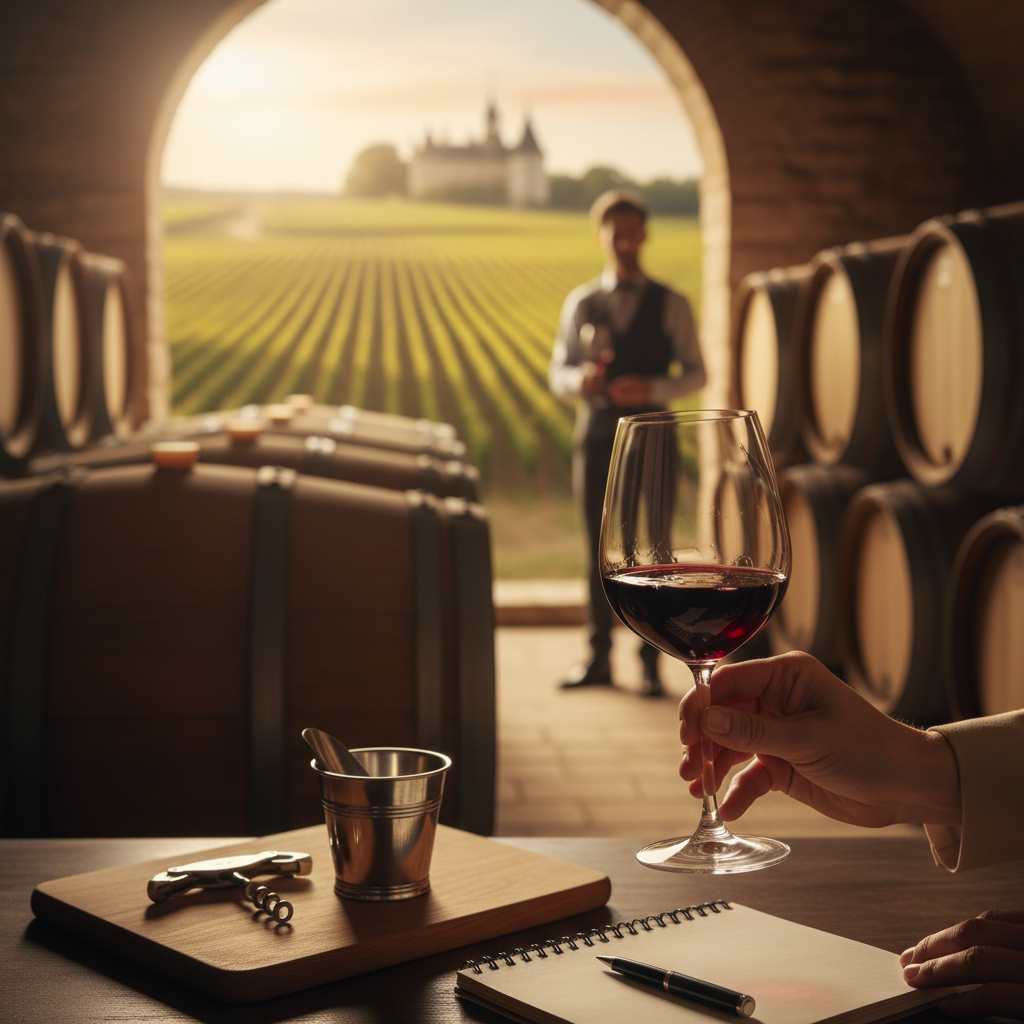
How to Taste Wine Like a Pro in 5 Simple Steps: The Complete Guide from VIS TON VIN
Wine tasting is an art, a science, and above all, an immense pleasure. Far from being reserved for seasoned sommeliers, it is accessible to anyone who wishes to deepen their appreciation of the nectar of the gods. At VIS TON VIN, we believe that every glass holds a story, and we are here to help you discover it. Forget the snobbery and complicated jargon: we will guide you through 5 simple steps to taste wine like a true professional, and significantly enrich your experience.
Why Learn to Taste Wine?
Before diving into the heart of the matter, let's ask ourselves: why bother to "taste" when you can simply "drink"? The answer is simple: to transform simple consumption into a true sensory experience. Learning to taste means:
* Discovering unsuspected complexity: Each wine is a universe of flavors and aromas.
* Making better wine choices: By understanding what you like, you will make more informed decisions and avoid disappointments.
* Sharing a unique moment: Tasting is a rich social activity, perfect for exchanging and learning.
* Developing your palate: Like a muscle, your palate refines with practice, allowing you to perceive increasingly subtle nuances.
Ready to awaken your senses? Follow the guide!
Step 1: The Visual Examination – The First Contact
Tasting begins long before the wine reaches your lips. The eye is the first sense to be engaged and can already reveal a multitude of information.
How to Proceed:
1. The White Background: Hold your glass by the stem or base, and tilt it slightly over a white surface (a tablecloth, a sheet of paper). This allows for better perception of color and clarity.
2. The Color:
* Red Wines: Observe the nuances ranging from purplish-red (young) to ruby (young to mature) to garnet (mature) and brick/brown (older, oxidized). The intensity of the color can indicate the wine's concentration.
* White Wines: From pale green/silver reflections (very young, vibrant) to pale yellow (young) to golden (mature, oaked) and amber (very old, sweet).
* Rosé Wines: From pale pink/salmon (light, fresh) to raspberry/cherry (more intense, fruity).
3. Clarity and Brilliance: The wine should be clear and brilliant. Slight turbidity may indicate an unfiltered wine (often a winemaker's choice) or a fault.
4. Fluidity and Legs (or Tears): Gently swirl the wine in the glass. Observe the "legs" that run down the side. Thick, slow legs may suggest a wine rich in alcohol and/or glycerol, but this is not an absolute indicator of quality.
What the Eye Tells Us:
Color can provide clues about the wine's age, its grape variety (some varieties are naturally more colored), its concentration, and even its aging method (an oaked wine may have more golden reflections).
Step 2: The Olfactory Examination – The Wine's Nose
The nose is undoubtedly the most important sense in tasting, as it reveals the wine's aromatic richness. We generally distinguish two stages.
The First Nose (Still):
Without swirling the glass, bring it to your nose and inhale gently. This is the "first nose," which reveals the most volatile and often the most straightforward aromas.
The Second Nose (Swirled):
Swirl the wine in the glass for a few seconds. This allows the wine to aerate, release new aromatic molecules, and intensify the initial ones. Bring the glass to your nose again and inhale.
How to Identify Aromas:
* Aromatic Families: Try to classify aromas into broad families:
* Fruity: Red fruits (raspberry, blackcurrant), black fruits (blackberry, plum), white-fleshed fruits (pear, peach), citrus (lemon, grapefruit), exotic fruits (pineapple, mango).
* Floral: Rose, violet, honeysuckle, acacia.
* Vegetal: Cut grass, green bell pepper, undergrowth, mushroom, eucalyptus.
* Spicy: Pepper, cinnamon, vanilla, licorice, clove.
* Empyreumatic (Toasted/Roasted): Coffee, cocoa, tobacco, smoke, toasted bread.
* Animal: Leather, musk (often in old wines).
* Mineral: Flint, gunflint, chalk.
* Balsamic: Resin, pine.
* Intensity and Complexity: Is the wine discreet or very expressive? How many different aromas do you perceive? A complex wine reveals many aromatic layers.
* Quality: Are the aromas pleasant, clean, or do you perceive unpleasant odors (cork taint, vinegar, excessive sulfur)?
Practical Tip:
Don't be afraid to be wrong. The brain associates smells with memories. If an aroma reminds you of your grandmother's jam, that's an excellent lead! The more you smell, the richer your olfactory memory will become.
Step 3: The Gustatory Examination – The Palate Awakens
This is the long-awaited moment! The mouth is where all elements come together to form the complete tasting experience.
How to Proceed:
1. The First Sip: Take a small sip (about 5 to 10 ml) and let it circulate throughout your mouth. Do not swallow it immediately.
2. Aeration: Inhale a little air through your mouth while keeping the wine in. This oxygenates the wine and releases more aromas retro-nasally (towards the nose from the mouth), thus intensifying the flavors. This is what pros call "retro-olfaction."
3. Fundamental Flavors: Identify the primary flavors:
* Sweet: Primarily on the attack, especially for sweet or dessert wines.
* Acid: Provides freshness, liveliness. Essential for balance.
* Bitter: Can be present in tannins or certain grape varieties.
* Salty: Rarely dominant, but can add a touch of minerality.
4. Tactile Sensations (Texture):
* Alcohol: Manifests as a warming sensation in the mouth.
* Tannins (for red wines): Give a sensation of astringency, dryness. They can be silky, grainy, fine, powerful.
* Body: The weight of the wine in the mouth. Light, medium, full-bodied.
* Effervescence (for sparkling wines): Fineness of bubbles, persistence.
What the Palate Tells Us:
Taste confirms and complements the information from the nose. It allows for the evaluation of the wine's balance (harmony between acidity, sugar, alcohol, and tannins), its structure, and its complexity.
Step 4: The Finish – The Persistence of Pleasure
After swallowing (or spitting, if you are tasting many wines!), the experience doesn't stop. This is the time to evaluate the "finish" or "length" of the wine.
How to Proceed:
1. The Aftertaste: Once the wine is swallowed, concentrate on the sensations that linger in the mouth and retro-nasally.
2. The Length: How long do the pleasant aromas and flavors last? Length is measured in "caudalies" (one caudalie = one second). A quality wine will have a long and persistent finish, with evolving aromas.
3. The Quality of the Finish: Is it pleasant? Are the aromas the same as in the mouth, or do new nuances appear? A bitter or unpleasant finish is a sign of lesser quality.
What the Finish Tells Us:
A long finish is often synonymous with great quality and aging potential. It reveals the wine's concentration and complexity.
Step 5: The Conclusion – Synthesize and Appreciate
After analyzing the wine from all angles, it's time to synthesize and make an overall judgment.
How to Proceed:
1. Balance: Is the wine harmonious? Does any element (acidity, alcohol, tannins, sugar) dominate the others?
2. Complexity: How many different aromas and flavors did you identify? Do they evolve?
3. Intensity: Is the wine expressive or discreet?
4. Persistence: Is the length on the palate satisfactory?
5. Pleasure: Beyond technical analysis, did the wine give you pleasure? This is the most important criterion!
6. Take Notes: To progress, write down your impressions. This will help you build your sensory memory and better understand your preferences. A tasting journal is a valuable tool.
The Overall Judgment:
* Excellent: Balanced, complex, intense, long, and immensely pleasurable.
* Very Good: Very good qualities, perhaps a slight imbalance or less complexity.
* Good: Pleasant, without major flaws, but lacks complexity or length.
* Average: Correct, but of no great interest.
* Poor/Faulty: Presents flaws or is unpleasant.
Pro Tips for a Successful Tasting
* Temperature: Respect the serving temperature. Wine that is too cold dulls the aromas; wine that is too warm accentuates the alcohol.
* Glassware: Use an appropriate tulip-shaped wine glass with a stem. It helps concentrate aromas and allows for proper swirling.
* Environment: Taste in a calm environment, free from interfering odors (perfumes, cooking).
* Moderation: Taste in moderation. The goal is to analyze, not to consume excessively.
* Practice: Tasting is a skill that improves with practice. Taste different wines, compare them, and don't be afraid to experiment.
* Attend a Tasting: Joining a tasting workshop, like those we offer at VIS TON VIN in Paris, is an excellent way to learn and interact with experts and other enthusiasts.
In Conclusion
Wine tasting is a fascinating journey that awakens the senses and enriches the mind. By following these 5 simple steps, you will transform every bottle into a sensory adventure. Never forget that the most important thing is the pleasure you derive from it.
At VIS TON VIN, we look forward to sharing our passion with you. Come discover our tasting workshops in Paris and let us guide you through the infinite world of wine. Cheers, and to many wonderful discoveries!