
The secret of bubbles: demystifying Champagne and crémants
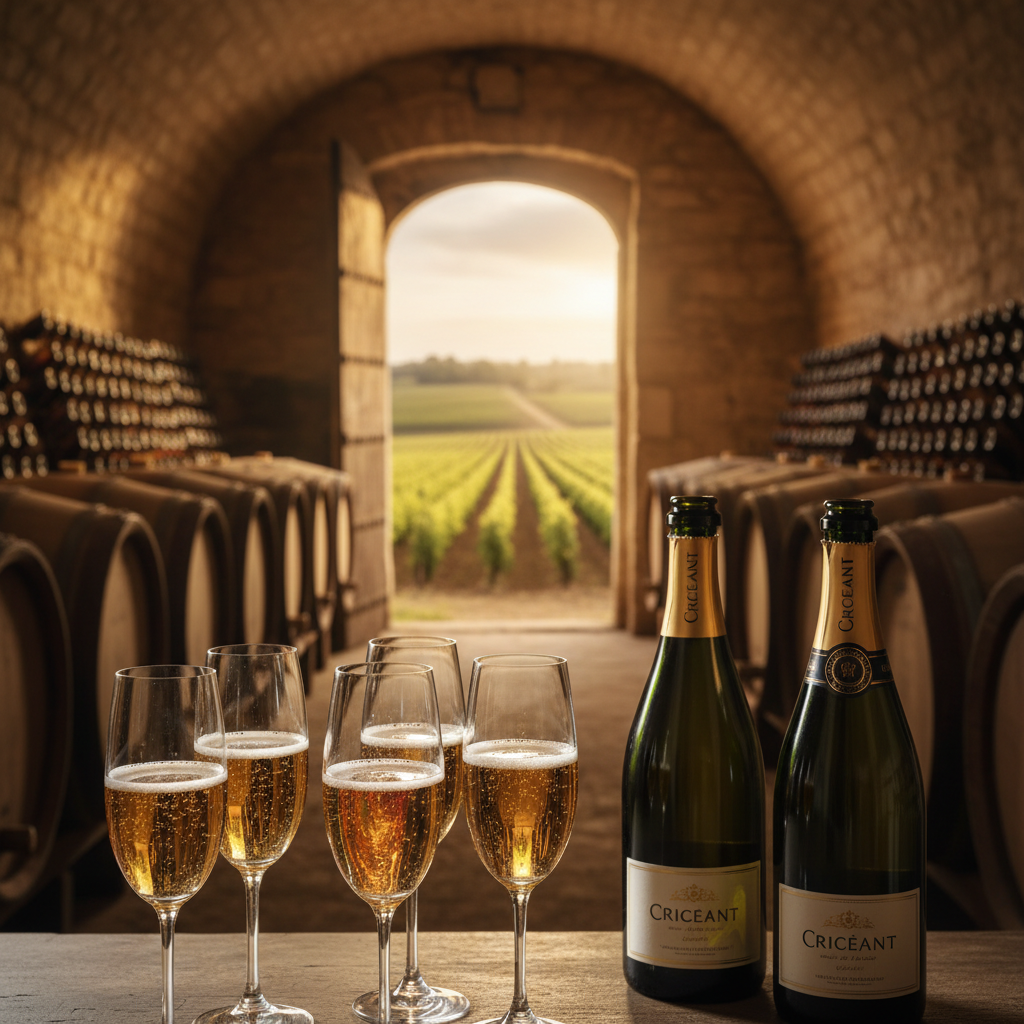
The Secret of Bubbles: Demystifying Champagne and Crémants
Ah, bubbles! A universal symbol of festivity, celebration, and elegance. But behind the joyful effervescence lies a world of nuances, terroirs, and expertise. Is it a matter of price? Of prestige? Or is there a real qualitative and technical distinction? Let's dive together into the secret of bubbles to demystify these two giants of effervescence.
More Than Just a Name: The Traditional Method
At the heart of the distinction between Champagne and Crémant lies a common production method: the traditional method, formerly known as the "Champenoise method." It is this complex and demanding technique that gives these wines their fine, persistent bubbles and their complex aromas.
#### Key Steps of the Traditional Method:
1. Harvesting and Pressing: Grapes are hand-picked and delicately pressed to obtain a base must.
2. First Fermentation: The must ferments in vats (stainless steel or oak barrels) to produce a still, non-sparkling wine, called "base wine" (vin clair).
3. Blending: This is a crucial step, especially in Champagne. The cellar master blends different base wines (from various grape varieties, plots, and sometimes different years) to create the desired cuvée and maintain the consistency of the house style.
4. Tirage and Second Fermentation in Bottle: The wine is bottled with a tirage liqueur (sugar and yeasts). The bottles are capped and stored horizontally. The yeasts convert the sugar into alcohol and carbon dioxide, which, trapped in the bottle, creates the bubbles.
5. Aging on Lees (Sur Lattes): The bottles rest on their sides (sur lattes) for a minimum period defined by the appellation. It is during this phase that the dead yeasts (lees) release complex aromas of brioche, toasted bread, and dried fruits.
6. Riddling (Remuage): The bottles are gradually turned and tilted, neck down, to collect the yeast deposit in the neck.
7. Disgorgement (Dégorgement): The neck of the bottle is frozen, and the deposit is expelled by the pressure.
8. Dosage: An "expedition liqueur" (a mixture of wine and sugar) is added to adjust the sweetness level (Brut, Extra-Brut, Sec, Demi-Sec...).
9. Corking and Dressing (Habillage): The bottle is sealed with a cork and muselet, then dressed for commercialization.
Champagne: The Undisputed Star
Champagne is much more than a sparkling wine; it is a strict protected designation of origin (AOC), globally protected, which can only be produced in the Champagne region of France.
#### Grape Varieties and Terroir:
The three main grape varieties of Champagne are Chardonnay (for finesse and freshness), Pinot Noir (for structure and red fruit aromas), and Meunier (for fruitiness and roundness). The Champagne terroir, characterized by its chalky soil and cool climate, is unique and gives the wines a distinctive minerality and acidity.
#### Specificities of Champagne:
* Strict Regulations: Production rules are among the most rigorous in the world, from vine pruning to yields, pressing, and aging.
* Minimum Aging: 15 months for a non-vintage Champagne, and 3 years for a vintage Champagne. Many great houses age well beyond these minimums.
* Prestige and Complexity: Champagne is renowned for its aromatic complexity, fine bubbles, and long persistence on the palate, often with notes of brioche, dried fruits, citrus, and white flowers.
Crémants: Diverse Effervescence
Crémants are also sparkling wines produced using the traditional method, but outside the Champagne region. There are eight Crémant appellations in France (Alsace, Burgundy, Loire, Jura, Limoux, Bordeaux, Die, Savoie) and even one in Luxembourg.
#### Varied Grape Varieties and Terroirs:
Unlike Champagne, Crémants use a wide variety of grape varieties, specific to their respective regions. For example:
* Crémant d'Alsace: Pinot Blanc, Pinot Gris, Riesling, Chardonnay, Pinot Noir.
* Crémant de Bourgogne: Pinot Noir, Chardonnay, Gamay, Aligoté.
* Crémant de Loire: Chenin Blanc, Cabernet Franc, Chardonnay.
* Crémant de Limoux: Mauzac, Chardonnay, Chenin Blanc.
This diversity of grape varieties and terroirs offers a much broader aromatic and stylistic palette than Champagne.
#### Specificities of Crémants:
* Regulations Specific to Each AOC: Each Crémant appellation has its own specifications, less restrictive than Champagne's but guaranteeing quality.
* Minimum Aging: Generally 12 months on lees, which is less than Champagne, but some producers go beyond.
* Excellent Value for Money: Crémants often offer remarkable quality at a more affordable price than Champagne, making them accessible for all occasions.
* Varied Styles: From the fruity freshness of a Crémant d'Alsace to the roundness of a Crémant de Bourgogne rosé, there's something for every taste.
Practical Tips for Choosing and Enjoying Your Bubbles
Now that you better understand their differences, here are some tips to fully appreciate Champagne and Crémants.
#### When to Choose One or the Other?
* For Grand Occasions and Prestige: Champagne remains the quintessential choice for marking important moments, thanks to its history, prestige, and complexity.
* For Daily Aperitifs or Dinners with Friends: Crémants are perfect for more informal occasions. Their diversity allows for surprising and delicious food and wine pairings.
* For Discovery and Curiosity: Don't hesitate to explore the different Crémant appellations. It's an excellent way to travel through French terroirs.
#### Ideal Serving Temperature:
Serve your bubbles well chilled, between 8 and 10°C (46-50°F). Too low a temperature masks the aromas; too high a temperature makes the bubbles aggressive.
#### Glasses:
Forget the wide coupe glass, which allows aromas and bubbles to escape too quickly. Prefer a slender flute or, better yet, a tulip-shaped white wine glass that concentrates the aromas while allowing the bubbles to flourish.
#### Food & Bubble Pairings:
* Brut Champagne: Ideal as an aperitif, with seafood (oysters, shrimp), raw fish (sushi, ceviche), or scallop carpaccio.
* Blanc de Blancs Champagne (100% Chardonnay): Perfect with fresh cheeses, poultry in light sauces.
* Rosé Champagne: Dare to pair it with red fruit desserts or white meats.
* Crémant d'Alsace (Pinot Blanc): Excellent with quiche lorraine, fine charcuterie.
* Crémant de Bourgogne Rosé: Magnificent with summer salads, chicken skewers.
* Crémant de Loire (Chenin Blanc): Pairs well with goat cheeses, lightly spiced Asian dishes.
In Conclusion: The Art of Effervescence
Whether you opt for the grandeur of a Champagne or the charming diversity of a Crémant, you are choosing a wine born from ancestral know-how and unwavering passion. The important thing is to savor every bubble, discover the nuances, and share these sparkling moments.
At VIS TON VIN, we are convinced that every wine has a story to tell. We invite you to explore the fascinating world of bubbles at our upcoming tastings in Paris. Come demystify the aromas, understand the terroirs, and, above all, find the bubble that will make your taste buds tingle!
Ready to make your senses sparkle? Discover our upcoming sparkling wine tastings on [Link to VIS TON VIN events page].